Thoughtful insights on New Jersey governance
Garden State Voice offers straightforward discussions and commentary on the policies shaping New Jersey’s future from a conservative perspective.
5/8/20244 min read
Why energy became unaffordable in New Jersey.
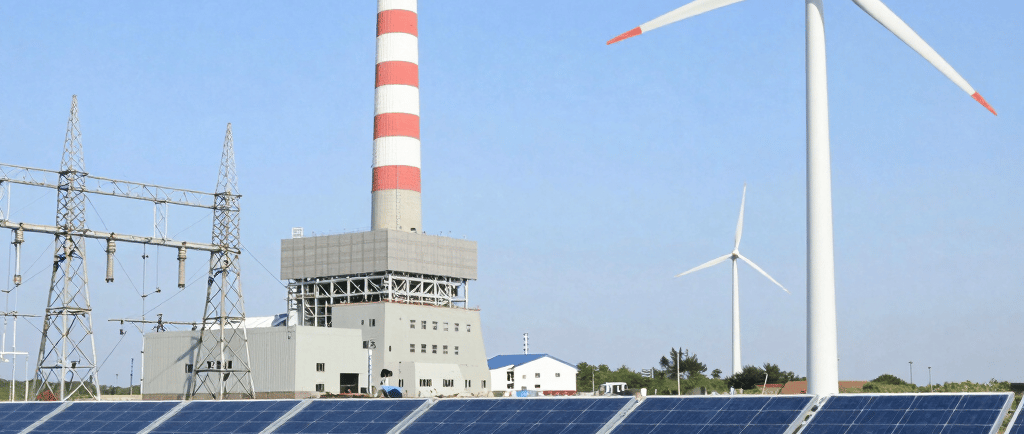
Since 2017, New Jersey closed seven power plants reducing the electricity produced and placed its reliance on wind power and solar to make up for the closures. The wind and solar projects never happened, as offshore wind was found to be uneconomical and solar panels take up precious farmland. As a result NJ electricity cost rose by 20% and were on target to rise another 20% but the BPU (Board of Public Utilities) delayed it.
New Jersey is forced to go into the marketplace to buy power from PJM. PJM is the federally regulated Regional Transmission Organization that operates the power grid and wholesale electricity markets for New Jersey and 12 other states, serving about 67 million people. They own those high voltage transmissions that you see on those towers. When you purchase power from PJM you are not only paying for the KWH which they mark-up, but also for delivery costs (transmission). The cost of delivery is based on the volume of electricity delivered and how long it takes to make the delivery. New Jersey is in a high demand area where there is congestion on the transmission lines, this also raises the cost of the energy purchased.
PJM is like Amazon it doesn’t make the product but delivers it. At one time Amazon used Fed X and UPS to affect its deliveries and still uses them where cost effective, but Amazon found by placing their warehouses near their consumers, they could eliminate using Fed X and UPS and reduce its costs. When NJ closed seven power plants, the electricity was no longer being produced near its customers and needed to have it delivered instead by PJM and incurred those costs.
PJM gets the power to sell from the following sources:
A. Pennsylvania (largest source)
NJ is tightly connected to PJM’s Pennsylvania generation fleet.
PA has abundant natural‑gas plants and exports large amounts of power into NJ.
B. New York
NJ imports power across the Hudson via transmission ties.
NY’s mix includes hydro, gas, and nuclear.
C. Other PJM States
Through PJM’s shared grid, NJ also receives electricity from:
· Maryland
· Delaware
· Ohio
· West Virginia
· Virginia
PJM’s State Net Import/Export Map shows NJ as a consistent net importer. PJM controls the wholesale system that sets the underlying cost of electricity. If we produce electricity in NJ we can avoid the use of PJM.
In the meantime, NJ consumers are underwriting energy costs in seven other states who are selling us KWH via PJM. So, we may have reduced NJ carbon footprint by shifting it to neighboring states at a significant cost to NJ consumers. Considering that the wind generally blows west to east, I’m not sure what was really accomplished.
When we buy energy, we are not only paying for the cost of its production but also for its transmission and delivery costs. If it were made in NJ, the delivery costs which make up 50 - 60% of the electric bill would disappear. Reducing NJ energy cost is complex, but a solution is needed. The cost of natural gas is low, but by the time the energy gets to the consumer the cost is too high.
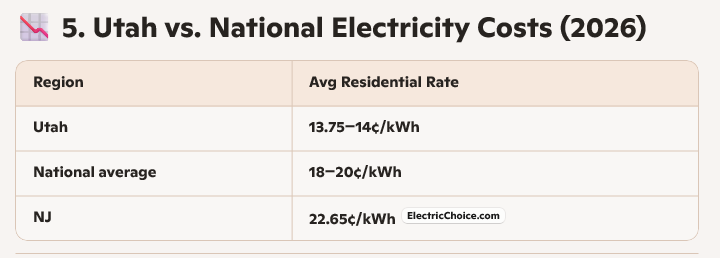
Utah produces its electricity locally.
In New Jersey, The NJ Board of Public Utilities regulates New Jersey’s essential utility services — electricity, natural gas, water, telecom, and cable — ensuring they are safe, adequate, and provided at reasonable rates. Utility profits are set by the Board of Public Utilities through a rate‑of‑return system in which companies earn profit only on approved infrastructure investments—not on selling electricity. The BPU determines a utility’s revenue requirement, rate base, and allows return on equity during base rate cases, which together define how much profit the utility may collect. Additional riders and trackers allow cost recovery for specific programs outside full rate cases, sometimes with an added return. Because supply costs are passed through at no markup, all utility earnings come from the regulated return on capital spending, a structure that incentivizes continuous infrastructure investment and drives much of the growth in customer bills.
The head of the board is Christine Guhl‑Sadovy:
B.A. in Psychology, Rutgers University (2002)
Her interest in public service began during her Rutgers years.
📘 Early Career
Took graduate courses in animal science and conservation.
Worked at the Bronx Zoo and Philadelphia Zoo.
Served as a legal assistant while considering law school.
🌱 Environmental & Advocacy Work
Organizing Representative, Sierra Club
Worked on New Jersey’s clean‑energy plan and environmental policy.
Involved in drafting the 2010 Energy Master Plan and early EV incentives.Legislative & Political Director, Planned Parenthood Action Fund of NJ
Focused on restoring state family‑planning funding.
The Relationship between PJM & BPU Is Often Tense
· Capacity prices: NJ believes PJM’s model overpays fossil generators.
· Interconnection delays: Slow approvals block NJ’s clean‑energy buildout.
· Transmission cost allocation: NJ wants fairer sharing of regional costs.
· State policy vs. regional market rules: NJ’s clean‑energy goals sometimes conflict with PJM’s market design.
Solving the cost of electricity in New Jersey is a complex problem. What is New Jersey doing to deal with the problem? We don’t need a committee to investigate it we need someone assigned to achieve a solution and to make their progress or lack thereof available to the public.